
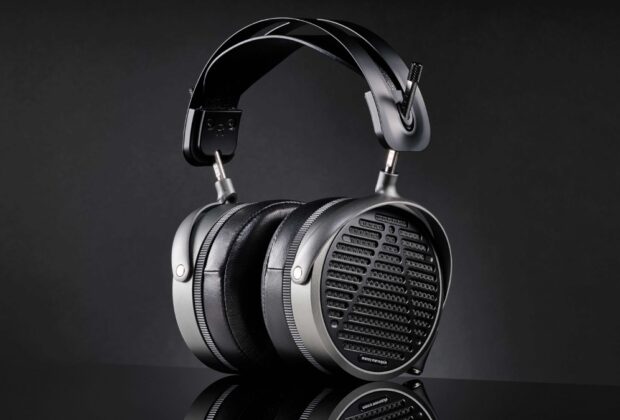
They cost as much as a pair of professional monitors, and that says it all about the ambition of the new Audeze MM-520s
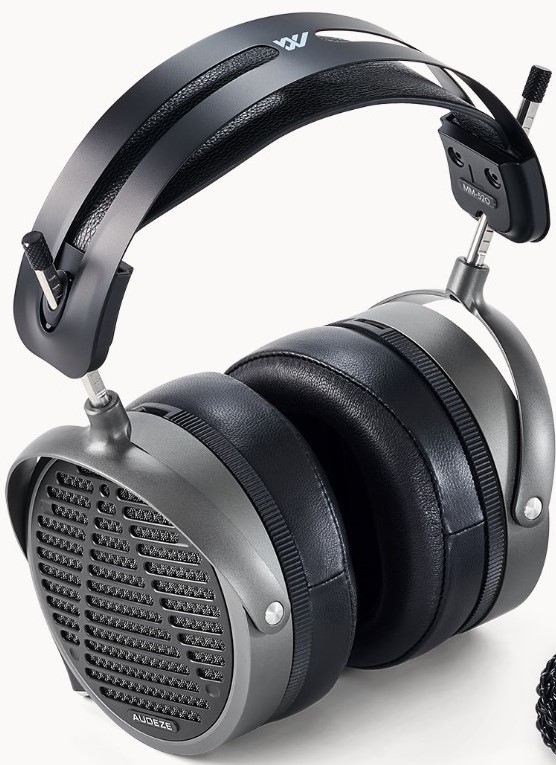
Audeze is a high-end headphone brand with a dedicated music production department for mixing and mastering. The culmination of Audeze's research for the professional field was its collaboration with Manny Marroquin on the previous MM-500 model. The MM-520 headphones started from that foundation, integrating SLAM (Symmetric Linear Acoustic Modulator) technology for deep, detailed bass reproduction. Along with this move, which we're sure you're very happy with, the response curve has also been slightly recalibrated.
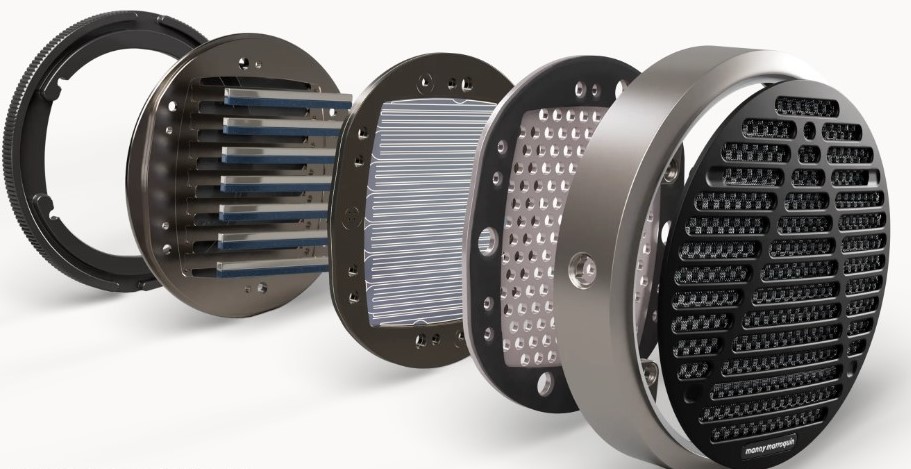
To learn more about the technological features employed in the MM-520, we refer you to the review of the Audeze LCD S20 , which impressed us greatly with their reproduction quality. The MM series was designed for studio use, so it should be emphasized that the listening objectives are different from those of Hi-Fi. In mixing and mastering, in addition to a frequency response that must be as broad as possible, it is important to have a reference on the mid-frequencies that must be highly intelligible and very fluid dynamics, obviously also influenced by the type of headphone amplifier and their impedance.
Hardware
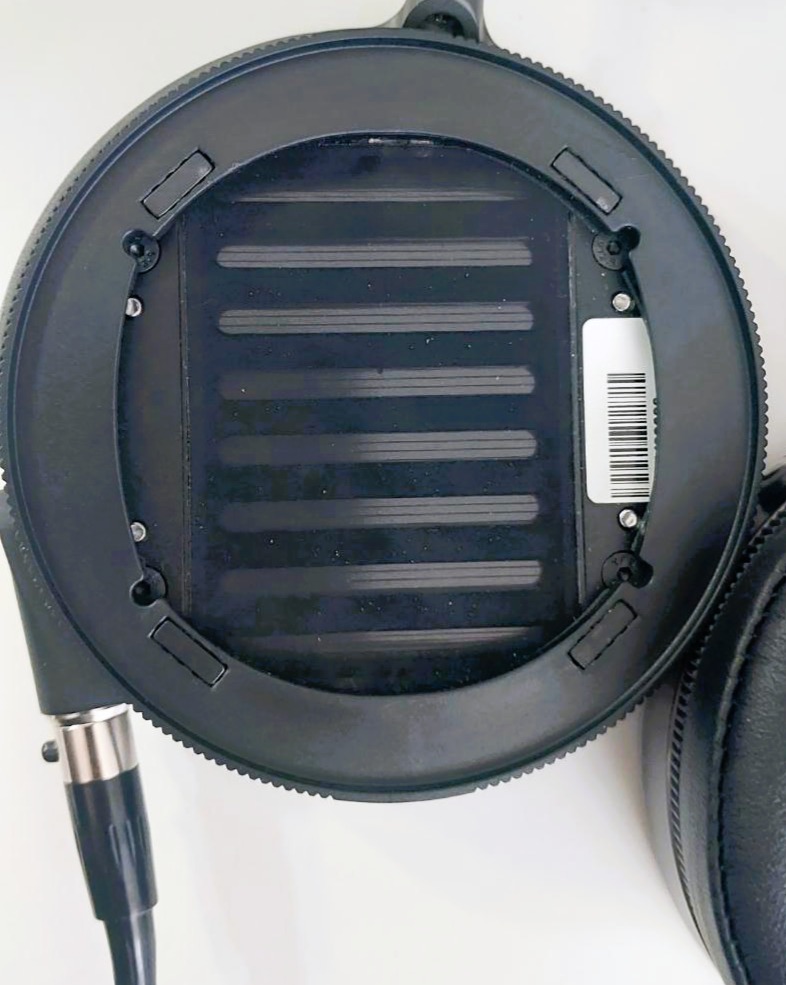
The MM-520 are magnetic planar headphones with a 90mm Ultra-Thin Uniforce neodymium driver featuring the same Fazor technology seen in the LCD S20. They are open-back circumaural headphones. The earcups are taller than average and they are removable, held in place with magnets for easy replacement. They maintain an asymmetrical earcup shape to align the driver with the external auditory canal.
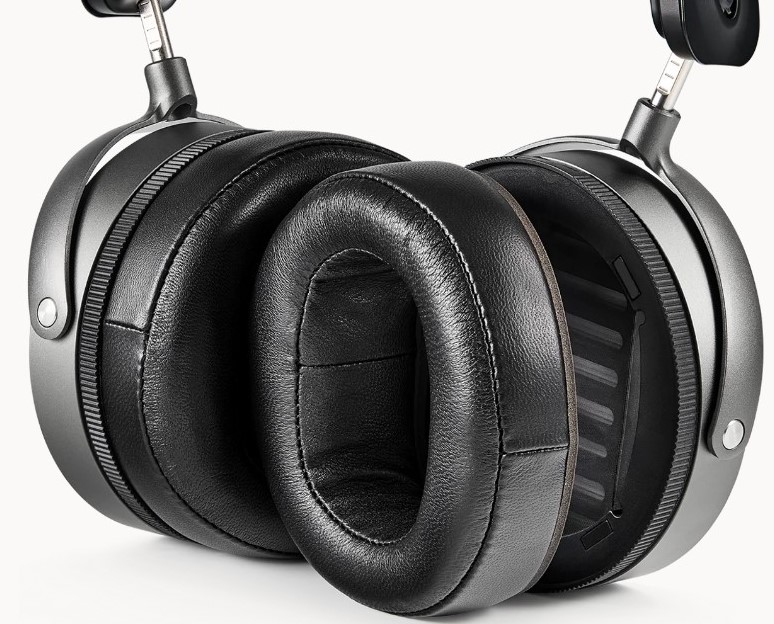
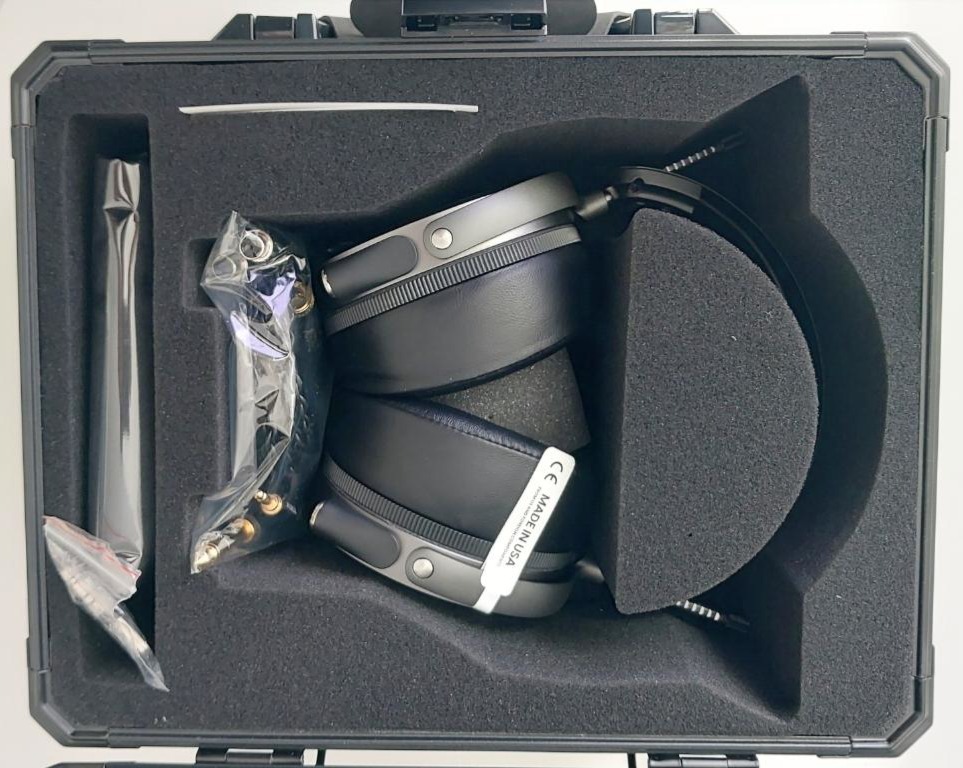
The construction is impeccable, and the headphones, along with their accessories, arrive in a generously sized case, well-padded with foam to protect them during transport. Audeze also includes a 2.5-meter braided balanced cable, a 3.5 mm to 6.3 mm adapter cable, and a soft bag if you don't want to use the case for transport.
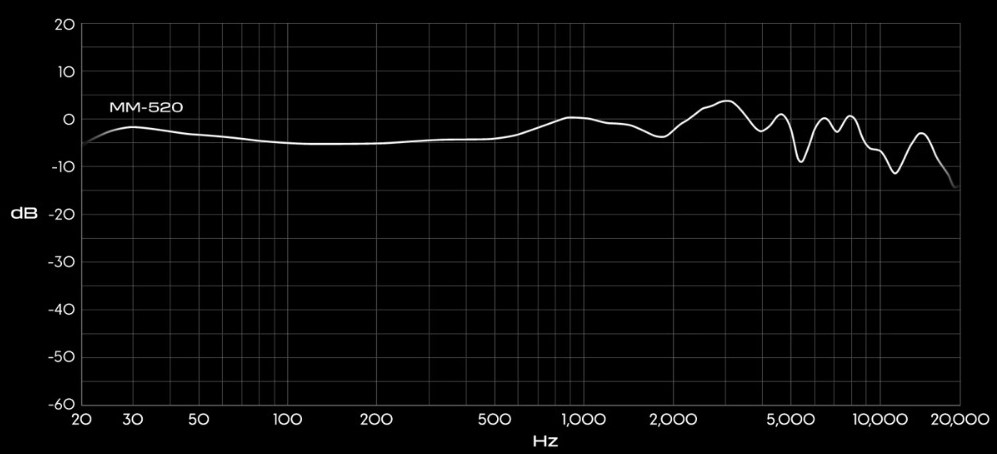
The state a maximum SPL of 130 dB, frequency response of 5 Hz to 50 kHz, impedance of 18 Ohms, THD of less than 0.1% @100 dB SPL @ 1 kHz, a sensitivity of 102 dB/1 mW, a minimum power requirement of 100 mW, and a maximum power handling specifications of 5 watts RMS. Compared to the previous MM-500s, the weight has increased to 555 grams. The frequency response, recorded by Audeze, shows an increase around 30 Hz and 3 kHz.
Field test
Putting on and listening through the MM-520s is a new experience, coming from headphones with classic drivers. The first impression, confirmed later, is the presence of a subtle ambience that is impossible to identify with standard headphones. Usually, listening through headphones provides a very wide horizontal stereo field, but very little representation of the vertical position of sounds (unless you listen to binaural audio, but that's another story). The MM-520s immediately demonstrated a characteristic that had never been appreciated in headphones: the sounds also have a vertical distribution (from the center of the head downwards) with a three-dimensionality that we have never heard on other headphones. While not as evident as listening through studio monitors, this three-dimensionality and verticality changes the soundstage, bringing it closer to listening through studio monitors. In other words, listening is not only flattened horizontally, but has its own environmental dimension, which has always been absent from headphones. As a listening point, the MM 520s changes everything we've heard so far, bringing the sound engineer to a new level of translation, closer to the mixing or mastering room, which is already a cultural asset for those who work professionally. The choice of semi-open headphones favors these characteristics. By placing your hands on the headphones, thus closing the external grille, the equalization changes so much that it removes the bass and enhances only the mids, demonstrating SLAM technology.
The three-dimensionality and ambience of the MM-520s transform the listening experience of any source. The reproduction becomes fuller, more present, enveloping, and real. For example, listening to Sophonisbe clearly demonstrates the distribution of the tracks in the stereo field and the three-dimensionality, sometimes with instruments almost behind the head. When played on other headphones, this perception is completely absent.
The MM-520's frequency response is boosted at low frequencies, which are predominant. The wow effect is guaranteed on the kick drum, bass, and any sound below 50 Hz, but this tends to reduce the perception of high frequencies. To balance them with our listening style, we switched to the IK Multimedia ARC On EAR equalizer with a shelving filter with a Q of 0.75, -3.60 dB at 50 Hz, combined with a bell filter with Q of 2.0 at 3000 Hz at -3 dB , which, at first listen, tends to give minimal resonance if not equalized. We also inserted a shelving filter at 4.7 kHz +2.1 dB with Q of 0.70 to give a little more breath. These changes are personal, as each of us is accustomed to listening with a unique curve. Even with these modifications, the MM-520s remain headphones that can be described as warm, rich in low frequencies, never harsh on the highs, with very present transients on the kick drum and percussion, with the same listening experience you can get in the studio on a two-way with a sub. Identifying the kick drum and bass is very easy, in its components, as it is controlling the dynamics, which are broader and more fluid.
When working in a mix, the compressor is quickly set up, and the equalization is also accurate when listening on studio monitors. Vocals are always reproduced with all the possible detail, and any harmonic distortion applied by plugins or outboard gear is easily appreciated. The level of precision is so high that they become headphones capable of analyzing any track in the mix or stems in mastering, fully aware of what you're doing.
In any situation, the MM-520s never become tiring, while maintaining the listener's attention span thanks to the level of detail achieved. The weight is significant: over half a kilo on the head, they're a challenge: wearing them makes you feel the weight, but after about ten minutes, the feeling passes: just by moving your head, you realize there's something on your head. When concentrating on your work in the studio, they're quite easily forgotten. After hours of work, the only aspect that cannot be avoided is the heat felt on the skin due to the pads, which adapt very well to any asymmetry of the body, but a covered area of the body will still heat up.
Where the Audeze MM-520s leave monitors behind is in the microdetails that can be heard even at low volumes: nothing escapes even at low amplification levels, and tracking delays, ambience, attacks, decays, and position on the stereo soundstage is completely natural. And above all, the low frequencies don't disappear!
Listening to Spy Mode song is a new experience: if you happen to try them, from this listening you will understand the value of the reverberations and the ambience on the low frequencies, compared to other headphones.
Jazz and acoustic productions are another area where the MM-520 is particularly satisfying for mixing and mastering: recording errors, placement errors and phase errors between microphones are all easily detectable, as is the work done in the mix.
For those who produce Hip Hop, EDM, Funk, Soul and R&B, the MM-520 are a first choice: the amount of information obtained below 80 Hz is a feast for the sound engineer, for dynamic and transient description.
There's no doubt that the MM-520s, along with Audeze's other SLAM-equipped models, are the best at reproducing low frequencies, with a naturalness never heard before on other headphones unless properly EQed. Working in the mix to create movements and gates in the bass is even better than with a pair of mid budget monitors without a sub.
The MM-520s have demonstrated remarkable flexibility, which is also found in pop and rock, where it is easy to understand the techniques and mix choices applied, or any production directions, which do not go unnoticed.
MM-520 and orchestral music: by now we have understood that there is no genre that these Audeze MM-5200 are not able to handle and, in this case, we bypassed the equalization because the listening was balanced and more powerful on the bass, with a more cinematic color, as it was out of the box.
And what about Dolby Atmos? The MM-520s are excellent for naturalness and enhance it. Listening to the trailer for the latest Star Wars movie is as powerful and immersive as you'd expect, just remember to disable the Stable Volume feature in your YouTube settings.
When mixing and mastering, the most accurate results are achieved with high-end converters and headphone amplifiers. Under standard conditions, with popular audio interfaces, the MM-520s consistently deliver above-average results, but when switching to, for example, the Merging HAPI MK III headphone output with a Premium D/A card, the MM-520s are so impressive that anyone who has worn them in the studio has been left speechless by their transparency, power, detail, and naturalness.
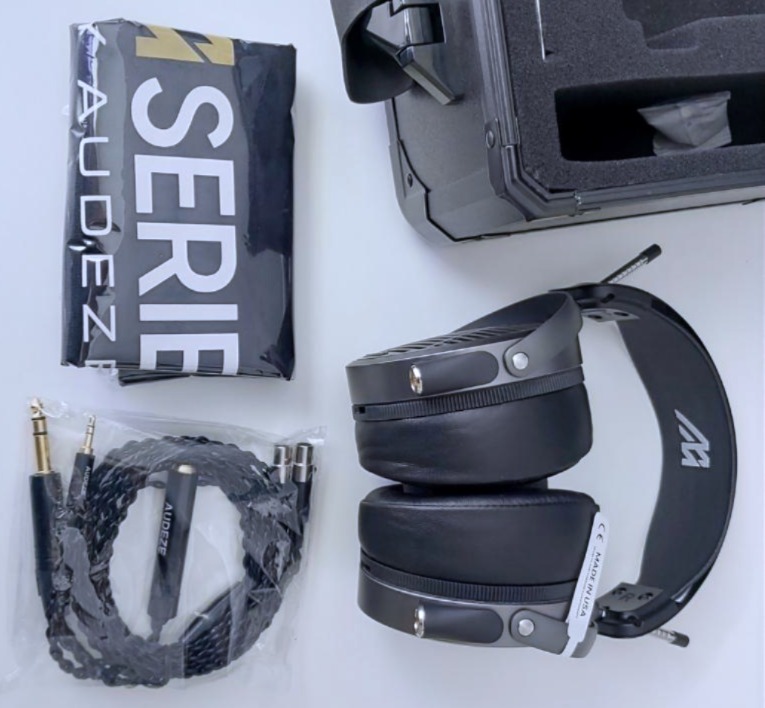
Audeze MM-520, the contents of the case
Conclusions
The price of the Audeze MM-520 puts these headphones in the premium professional mixing and mastering sector. The impeccable construction, meticulous attention to detail, and, of course, the reproduction quality—no hints at low frequencies and plenty of transients—are the elements that drive the choice of the MM-520.
Audeze's work is impressive, and listening with them is a new experience worth trying, to get an idea of the level of headphone listening. It's also an experience worth having because what you'll hear with these headphones is different from what we're used to listen to headphones.
The MM-520s sit somewhere between studio monitor listening and the headphone listening we've known up until now. Audeze has reduced the distance between studio monitors, placed in a controlled environment, compared to the professional standard of headphone listening, offering a monitoring system more akin to studio listening with an ambience, detail quality, low-frequency depth, and dynamic response that every self-respecting sound engineer must experience at least once. Sensational, exciting, and reliable.